If you stand today on Falmouth’s lively waterfront with coffee in hand, seagulls overhead, and the masts of yachts clinking in the harbou. It’s hard to imagine that this thriving Cornish town began as a single manor house. Yet beneath the bustle lies the story of Arwenack, a once grand estate that helped shape one of Cornwall’s most important coastal towns.
Arwenack is more than just a historical footnote, it is the root from which Falmouth grew, and its story is woven through centuries of ambition, rebellion, piracy, and royal favour.
A Name from the Old Tongue
The name Arwenack itself hints at Cornwall’s deep Celtic past. Derived from the ancient Cornish language, it’s said to mean either “the beloved, still cove” or “upon the marsh.” Both are apt. The land here lies between the gentle inlets of the Fal Estuary, once a quiet, marshy haven that would later become one of the world’s greatest natural harbours, known as the Carrick Roads.
It was this geography that made Arwenack both precious and strategic. The sheltered waters offered safe anchorage to ships and easy access to trade routes, but also made it a tempting prize for those who sought control of Cornwall’s coast.
From the de Arwenacks to the Killigrews
The earliest known lords of the manor were the de Arwenack family, recorded as early as the 13th century. When the last of their line, Jane de Arwenack, married Simon Killigrew around 1377, the manor passed to one of the most colourful families in Cornish history, the notorious Killigrews.
From that point on, Arwenack became their stronghold, and for the next three centuries, the Killigrews would dominate both local and national affairs. They were courtiers, merchants, governors, pirates, and sometimes all four at once.
Simon Killigrew’s descendants expanded the estate and built the first iteration of Arwenack House, a grand residence overlooking the sea. It was a fitting base for a family whose ambitions would soon stretch far beyond Cornwall.
The Killigrews: Fortune and Folly
Few Cornish dynasties embody the contradictions of the age like the Killigrews. They were loyal servants of the Crown, yet often lawless at home. The family produced Members of Parliament, ambassadors, and royal courtiers—but also smugglers, pirates, and scandalous socialites.
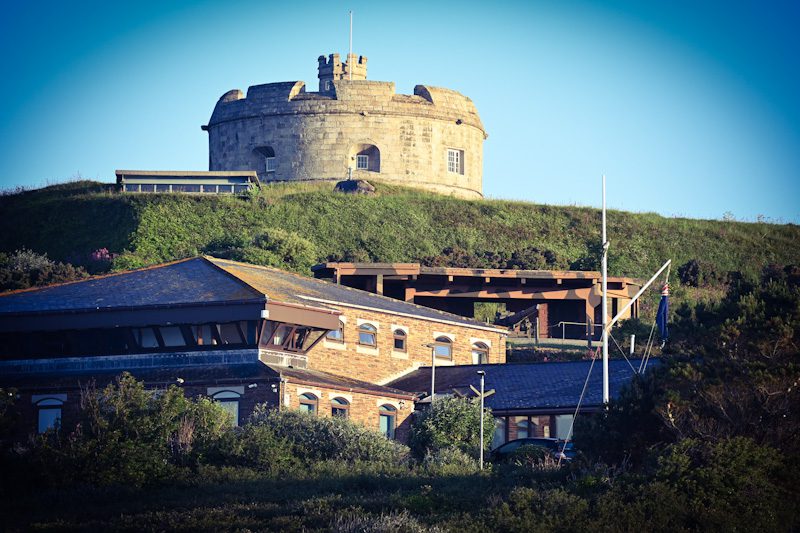
John Killigrew (died 1567) became the first Governor of Pendennis Castle, the great fortress built by Henry VIII on Killigrew land to defend England’s western flank. A monumental brass to him still survives in nearby St Budock’s Church, depicting him beside his wife Elizabeth Trewennard. He was praised as a man of status and influence, rebuilding Arwenack House into what contemporary accounts called “the finest and most costly in the county.”
But prosperity brought temptation. His son, Sir John Killigrew (died 1584), inherited not only his father’s office but also his appetite for adventure. A notorious figure, Sir John was accused of piracy, cattle theft, and corruption while serving as a Justice of the Peace. He was even investigated for plundering a Spanish ship that had sought shelter near Arwenack, allegedly with his formidable wife Mary Wolverston—known locally as the “Gentlewoman Pirate.”
The family’s reputation for mischief grew. Later generations dabbled in smuggling, feuds, and political intrigue, with Falmouth’s creeks and coves offering ideal cover for less-than-legal enterprise.
A Royal Cause and a Great Loss
By the mid-17th century, Arwenack’s fortunes had become entwined with those of the English Crown. Sir Peter Killigrew (c.1593–1668), a loyal Royalist, earned the nickname “Peter the Post” for his swift service carrying messages for King Charles I during the Civil War. His loyalty, however, came at a terrible price.
In 1646, as Parliamentary forces besieged Royalist-held Pendennis Castle, Arwenack House was destroyed by fire. Once a symbol of grandeur, it was left a ruin—a casualty of the war that reshaped England. Only fragments of the great hall window survived, silent witnesses to its past splendour.
Yet Sir Peter was not a man to accept defeat. Following the Restoration of the monarchy in 1660, he was rewarded by King Charles II with a royal charter to found a new town beside the ruins of his ancestral home. That town would be called Falmouth.
The charter described Sir Peter as “our beloved and faithful subject,” recognising his service to both King and kingdom. He moved the customs house from Penryn to his new settlement and built a parish church dedicated to King Charles the Martyr—a symbolic act of devotion to the executed monarch. When Sir Peter died in 1668, he was buried in that same church, having secured the Killigrew legacy not in stone, but in the living fabric of a town.
The Decline of the Killigrews
The generations that followed could not recapture the old power. Debt, duels, and ill luck haunted the family. The last direct male heir, Sir Peter Killigrew, 2nd Baronet (1634–1705), eventually left Cornwall for Shropshire. His descendants intermarried, died young, or faded into history.
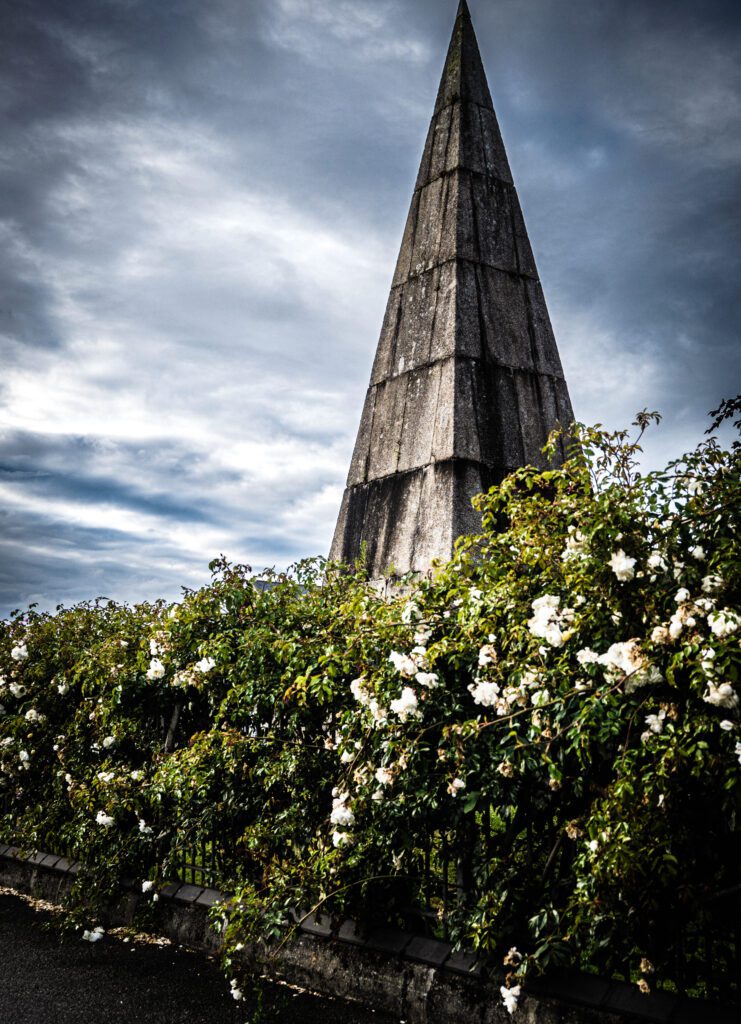
His daughter Anne married Martin Lister of Staffordshire, who adopted the name Lister-Killigrew and tried to preserve the family’s memory. A soldier and amateur historian, Lister-Killigrew wrote one of the first detailed histories of the family and of Arwenack itself. In 1737, long after the family’s fortunes had waned, he ordered the construction of a mysterious stone pyramid on the estate—no inscription, no dedication. It still stands today on Arwenack Green, a silent, enigmatic reminder of a dynasty that once ruled these shores.
A Place of Legend and Literature
Time and ruin gave Arwenack a new kind of power—the allure of legend. Locals whispered that the manor was cursed, that too much ambition and too little grace had doomed the Killigrews to tragedy.
This idea found its way into literature, most famously in The Grove of Eagles by Winston Graham, author of the Poldark novels. Set in the 1590s, the story follows an illegitimate son of John Killigrew, who reflects that “from his time on, there was always a hint of the feverish and the insolvent in our lives.” Graham’s Arwenack is not just a house—it’s a symbol of pride and decline, a mirror of the restless Cornish spirit itself.
Visiting Arwenack Today
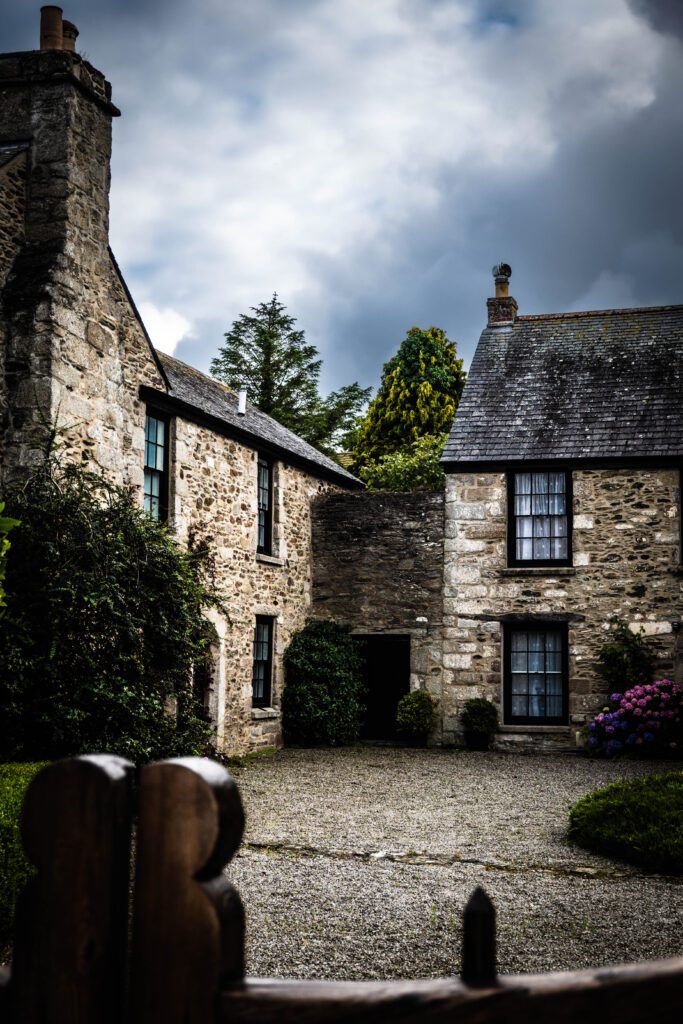
Very little remains of the original Arwenack House, though parts of its 15th-century walls survive within a later Georgian building near Falmouth’s waterfront. The nearby Arwenack Green is open to the public, with an impressive tree, lawns, and sea air, watched over by the weathered pyramid built by Martin Lister-Killigrew.
From here you can trace the shape of history: to the north, the bustling quays and cafés of modern Falmouth, and to the south, Pendennis Castle, still standing proud above the headland. Between them lies the story of a family whose ambition birthed a town—and whose name, though long vanished from the peerage, still lingers in the stones, streets, and stories of Falmouth.
The Legacy of Arwenack
In the end, Arwenack’s tale is not one of tragedy but transformation. The Killigrews may have fallen, but their creation thrives. Falmouth, with its art scene, maritime heritage, and global port, is the living continuation of a dream first imagined on that quiet Cornish shore.
Arwenack reminds us that every place we visit carries the echoes of lives lived before us of courage, folly, and persistence. It’s a story written not just in ruins and archives, but in the spirit of a town that still looks out to sea, forever ready for the next adventure.